Dog muzzles are essential tools in canine management, often misunderstood and stigmatized. When used correctly, muzzles can significantly improve safety and training outcomes for dogs and their owners. Let’s dive into what muzzles are used for, their benefits, the stigma surrounding them, and how to fit a muzzle appropriately.
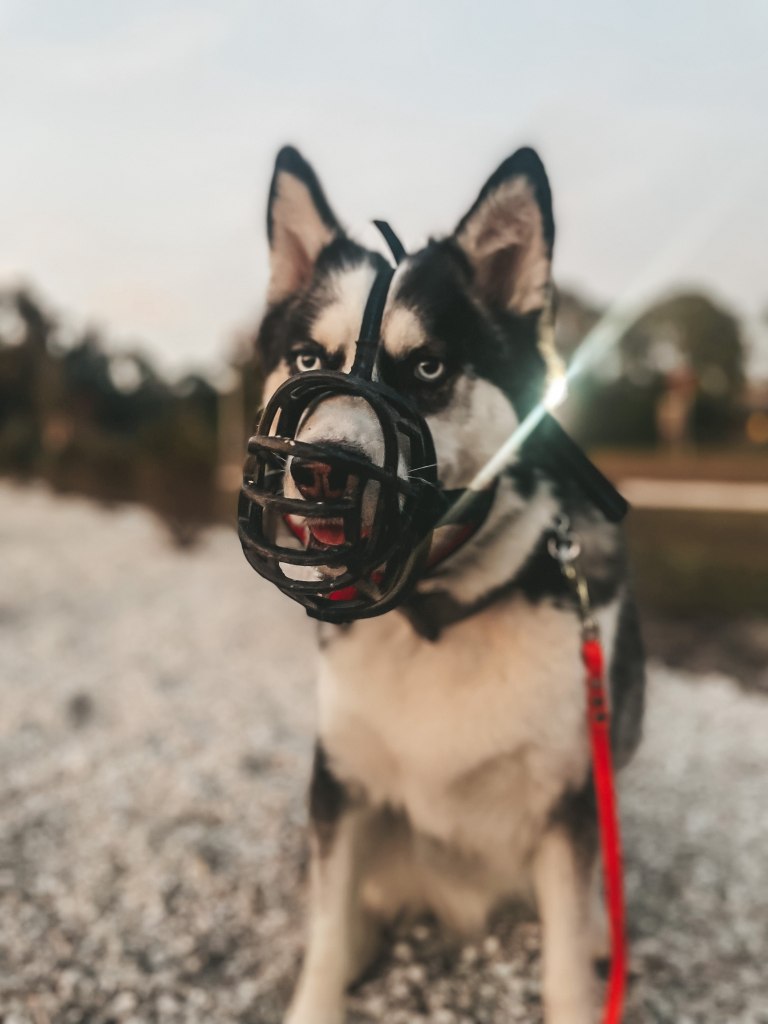
What Are Dog Muzzles Used For?
Dog muzzles are designed to cover a dog’s snout, preventing them from biting, chewing, or eating things they shouldn’t. They are used in various situations, including:
1. Safety During Vet Visits or Grooming: Dogs may react aggressively out of fear or discomfort. A muzzle ensures the safety of both the dog and the professionals handling them. We use the muzzle for every vet visit! It makes Kilo more calm and the staff more comfortable which also makes them more calm — if they have a calm energy so does Kilo!
2. Preventing Biting: For dogs with a history of aggression or those that are in the process of behavior modification training, muzzles can prevent harmful bites. This also allows reactive or aggressive dogs to still interact with other dogs in a safe environment!
3. Public Safety: In crowded or unfamiliar places, a muzzle can prevent a dog from reacting negatively to other dogs or people. Knowing that a dog cannot bite can reduce stress for the owner and those around them,making socialization and public outings more enjoyable.
4. Preventing Eating of Harmful Objects: Some dogs have a tendency to eat non-food items, which can be dangerous. A muzzle can prevent this behavior.
5. Emergencies: In chaotic or stressful situations such as vet visits, natural disasters, or emergency evacuations, muzzles can keep a dog calm and prevent them from biting out of fear or stress. Living in Florida, this was huge for us to muzzle train Kilo in the event that we need to evacuate for a hurricane.
6. Training Aid: Muzzles can be used as part of a behavior modification program to help dogs learn to manage their impulses and aggression. We used the muzzle as a training aid with Kilo on walks when he was a puppy because he was constantly trying to jump up on us and nip us, after a few weeks, we were able to eliminate the muzzle.
The Stigma Surrounding Dog Muzzles
Despite their benefits, muzzles often carry a stigma. Many people associate muzzles with aggressive or dangerous dogs. This misconception arises from a lack of understanding about their use and benefits. Some common reasons for the stigma include:
1. Negative Associations: People may think a muzzled dog is inherently dangerous, which can lead to fear and avoidance.
2. Lack of Awareness: There is often a lack of education about the positive uses of muzzles in training and safety.
3. Media Portrayal: Movies and TV shows frequently depict muzzled dogs as vicious, reinforcing negative stereotypes.
How to Fit a Muzzle Appropriately
A properly fitted muzzle is crucial for the comfort and effectiveness of the tool. Here are steps to ensure a proper fit:
1. Choose the Right Type: There are various types of muzzles, such as basket muzzles and soft muzzles. Basket muzzles allow dogs to pant and drink, making them suitable for longer periods. Soft muzzles are typically used for short periods, such as during grooming. You might need to try a few different ones to see which works best with your dog.
2. Measure Your Dog: Measure the length and circumference of your dog’s snout to select the right size. The muzzle should be snug but not too tight. Typically, the brand you are purchasing from has size guides.
3. Introduce Gradually: Allow your dog to get used to the muzzle gradually. Start by letting them sniff it and then reward them with treats. Gradually increase the time they wear it. We recommend working with a trainer for proper fitting and conditioning too!
4. Check for Comfort: Ensure the muzzle does not rub or chafe. Your dog should be able to pant and drink water if necessary.
5. Monitor Your Dog: Supervise your dog while they are wearing the muzzle, especially during the initial stages, to ensure they are comfortable and not in distress. The muzzle should not be left on for extended periods of time or without supervision.
Dog muzzles, when used correctly, are valuable tools for ensuring safety and aiding in training. Overcoming the stigma associated with muzzles requires education and awareness. By understanding the benefits and learning how to fit a muzzle properly, owners can use this tool effectively and humanely, ensuring a positive experience for both themselves and their dogs. Whether it’s a routine vet visit, a trip to the groomer, a walk in the park, or an emergency situation, a well-fitted muzzle can make all the difference in maintaining calm and safety.
We will continue to use our muzzle with Kilo because it sets us, him and everyone else up for success!
 Our Howling Adventures
Leave a comment